
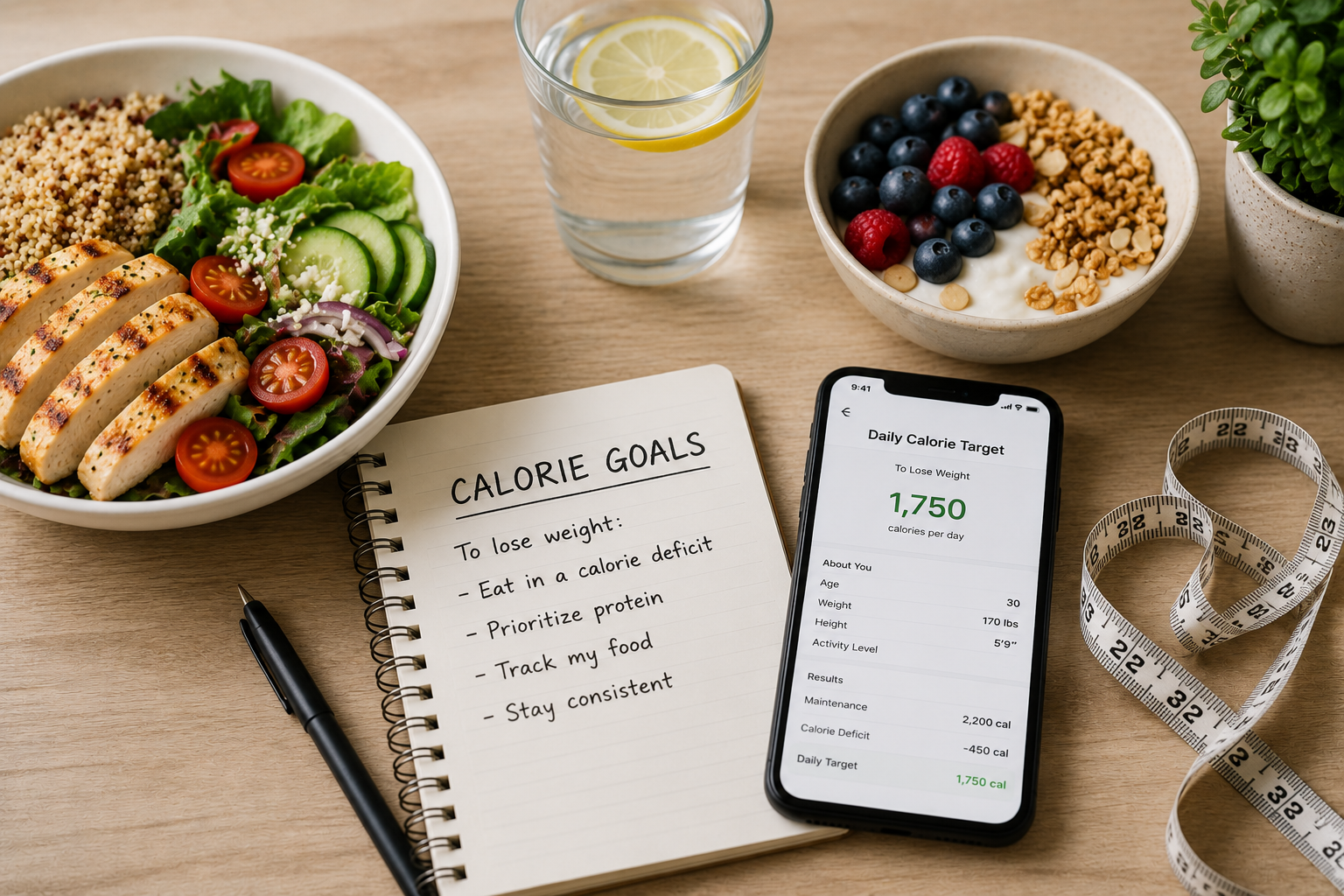
One of the most common questions people ask when trying to lose weight is:
"How many calories should I eat?"
It's a reasonable question, but the answer isn't the same for everyone.
Your ideal calorie target depends on several factors, including your age, sex, height, weight, activity level, and goals.
The good news is that you don't need a perfect number to get started.
You simply need a reasonable estimate.
Why Calories Matter
Regardless of which diet you follow, weight loss ultimately comes down to energy balance.
If you consistently consume fewer calories than your body burns, you'll lose weight.
If you consume more calories than your body burns, you'll gain weight.
This is known as a calorie deficit.
The challenge is figuring out how many calories your body actually needs.
What Determines Your Calorie Needs?
Several factors influence how many calories you burn each day:
Body Size
Larger individuals generally burn more calories than smaller individuals because they have more tissue to support.
Activity Level
Someone who exercises regularly or has an active job will burn more calories than someone who sits at a desk most of the day.
Age
Calorie needs tend to decrease slightly with age due to changes in muscle mass and activity levels.
Sex
Men typically require more calories than women because they often have more lean body mass.
A Simple Weight Loss Starting Point
While everyone's needs are different, many people can start with a calorie target that creates a moderate deficit.
The goal is not to lose weight as quickly as possible.
The goal is to lose weight consistently while maintaining energy, performance, and adherence.
Slow and sustainable progress is usually easier to maintain than aggressive dieting.
Why Most People Guess Wrong
One of the biggest mistakes people make is estimating both sides of the equation:
- They overestimate how many calories they burn.
- They underestimate how many calories they eat.
This often leads to frustration because they believe they're in a deficit when they're not.
Tracking your food intake and monitoring your body weight over time provides much better information than guessing.
Use a Calculator as a Starting Point
A calorie calculator isn't a crystal ball.
It won't tell you the exact number of calories you need.
What it does provide is a reasonable starting point based on your individual information.
From there, you can monitor your results and make adjustments if necessary.
Think of it as a roadmap rather than a guarantee.
What Happens Next?
Once you have your calorie target:
- Track your intake consistently.
- Weigh yourself regularly.
- Look at trends over several weeks.
- Adjust only if progress stalls.
For a lot of people a complicated nutrition plan isn't necessary.
They simply need a realistic calorie target and enough consistency to follow it.
Final Thoughts
You don't need to guess how many calories you should eat.
You don't need to follow the latest diet trend.
Start with a reasonable calorie estimate, track your progress, and make adjustments based on real-world results.
Weight loss becomes much simpler when you stop guessing and start using data.
Try the Calorie Calculator
If you want a quick starting point, use the Elevare calorie calculator to estimate maintenance calories and view realistic fat-loss targets.