
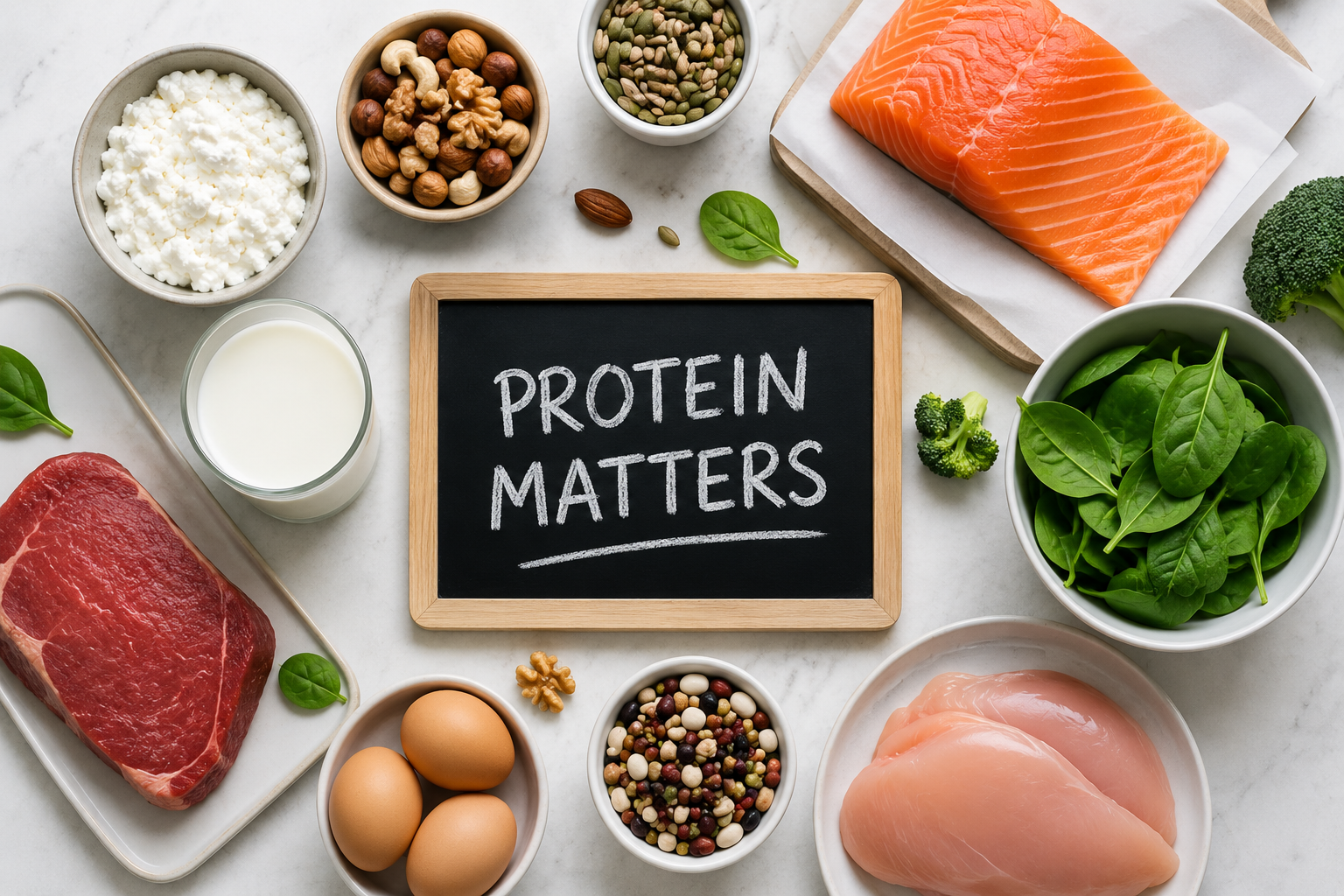
If you've ever looked up how much protein you should eat, you've probably seen a dozen different answers.
Some people say you only need 50 grams a day.
Others say you need at least one gram per pound of bodyweight, or that you can't have too much.
Then someone else tells you anything over a certain amount is wasted.
So what's the right answer?
The truth is that most people don't need to obsess over protein. But they probably should pay more attention to it than they currently do.
Most People Eat Less Protein Than They Think
One thing I've noticed is that people are usually aware of calories.
They know roughly how many calories are in a burger, a soda, or a slice of pizza.
Protein is different.
Ask someone how much protein they ate yesterday and most have no idea.
That's a problem because protein plays a big role in helping you stay full, recover from training, and maintain muscle while losing weight.
Why Protein Matters
Let's say two people eat the exact same number of calories.
The person eating more protein will often:
- Feel fuller throughout the day
- Have an easier time sticking to their diet
- Recover better from workouts
- Retain more muscle while losing weight
That's a pretty big return for something most people barely think about.
The Mistake I See Most Often
People assume they're eating plenty of protein because they had chicken at dinner.
Then they look at their actual intake and realize breakfast had almost none, lunch had very little, and dinner carried the entire day.
The result?
They end up much lower than they expected.
You Don't Need a Perfect Number
This is where a lot of people get stuck.
They spend hours trying to figure out whether they need 142 grams or 147 grams of protein.
It doesn't matter.
What matters is having a reasonable target and being consistent.
Getting close to your protein goal every day will produce far better results than chasing a perfect number for a week and then giving up.
A Simple Way to Think About It
Instead of asking:
"What's the exact amount of protein I need?"
Ask:
"Am I eating enough protein to support my goal?"
If you're trying to lose weight, build muscle, or improve your body composition, protein becomes more important.
If you're mostly sedentary, your needs are lower.
That's why there isn't one answer that works for everyone.
Use the Protein Calculator as a Starting Point
The protein calculator isn't meant to give you a magic number.
It's designed to give you a practical starting point based on your body weight, activity level, and goals.
From there, you can adjust based on your results and preferences.
The goal isn't perfection.
The goal is having a target that's realistic enough to follow consistently.
Final Thoughts
Most people don't need a complicated nutrition plan.
They don't need to eliminate entire food groups.
And they definitely don't need to spend hours debating protein intake on the internet.
They simply need a reasonable target and the consistency to hit it most days.
If you're not sure where to start, use the protein calculator to get an estimate and focus on building habits that you can maintain long term.
Because the best nutrition plan isn't the perfect one.
It's the one you'll actually follow.
Try the Protein Calculator
If you want a quick starting point, use the Elevare protein calculator to estimate a practical daily protein target based on your bodyweight and goal.