
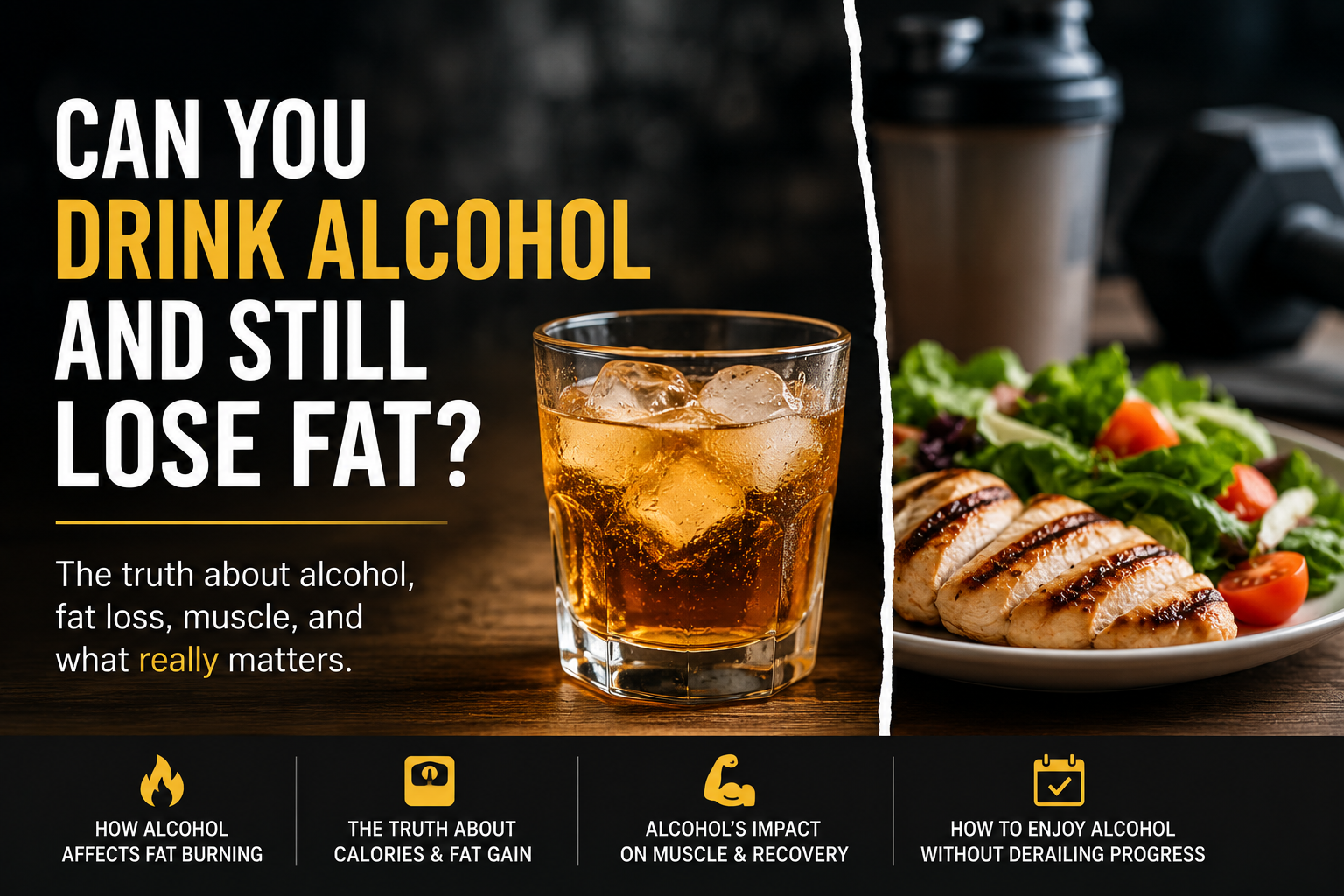
If you've ever tried to lose weight, you've probably heard some version of this advice:
"Stop drinking alcohol."
The reasoning seems obvious.
Alcohol contains calories.
Calories matter for weight loss.
Therefore, alcohol must automatically lead to fat gain.
But the truth is a little more complicated than that.
In fact, one of the most common questions people ask is:
"If I drank 4,000 calories of alcohol but didn't eat anything else, would I gain fat?"
It's a strange question, but it actually helps explain how alcohol works inside the body.
Alcohol Is Different From Food
When you eat carbohydrates, fats, or protein, your body can store or use them for energy.
Alcohol is different.
Your body doesn't really want alcohol hanging around.
As soon as alcohol enters your system, your body makes it the top priority to process and remove.
Think of it like a line at a grocery store.
Normally, carbohydrates, fats, and protein are waiting in line to be used for energy.
Then alcohol walks in and cuts to the front.
Everything else gets pushed back.
Why People Say Alcohol "Stops Fat Burning"
When alcohol is being processed, your body relies heavily on it for energy.
As a result, fat burning slows down significantly.
This is where the popular fitness advice comes from.
People often simplify it to:
"Alcohol stops fat loss."
That's not really true.
Fat loss doesn't permanently stop.
But your body does temporarily reduce the amount of fat it's burning while it deals with the alcohol.
So Does Alcohol Turn Into Body Fat?
Not very efficiently.
This is where a lot of confusion comes from.
Alcohol isn't stored as body fat nearly as easily as dietary fat.
Because of that, some people have concluded that alcohol calories don't count.
That's not true either.
Alcohol still contains energy.
In fact, alcohol contains about 7 calories per gram, making it more calorie-dense than carbohydrates or protein.
Those calories still matter.
The Bigger Problem
Let's say your body burns 2,500 calories per day.
Now imagine you consume 4,000 calories worth of alcohol.
Even if alcohol isn't directly converted into body fat very efficiently, you're still providing your body with far more energy than it needs.
The excess energy has to go somewhere.
The body cannot ignore calories simply because they came from alcohol.
Over time, a consistent calorie surplus can still contribute to fat gain.
Why Drinking Often Leads to Weight Gain
Ironically, alcohol itself is usually not the biggest problem.
The bigger issue is what happens after a few drinks.
Most people don't stop at alcohol.
They also end up with:
- Appetizers
- Late-night fast food
- Extra snacks
- Dessert
- Missed workouts
- Poor sleep
A few drinks can quickly turn into an entire weekend of eating and inactivity.
That's where many diets get derailed.
What About Muscle?
If your goal is building muscle, alcohol presents another challenge.
Occasional drinking is unlikely to erase months of hard work.
But frequent or heavy drinking can make progress more difficult.
Alcohol can:
- Reduce muscle protein synthesis
- Impair recovery
- Lower workout performance
- Disrupt sleep quality
- Make it harder to consistently hit protein targets
Again, the indirect effects are often more significant than the alcohol itself.
The Real Answer
Can you drink alcohol and still lose fat?
Absolutely.
People do it all the time.
Can alcohol make fat loss harder?
Also yes.
The key is understanding what alcohol actually does.
It isn't some magical fat-storage chemical.
But it isn't free either.
Alcohol provides calories, temporarily slows fat burning, can interfere with recovery, and often leads to eating more than intended.
The occasional drink is unlikely to ruin your progress.
The habits that surround drinking are usually what matter most.
Final Thoughts
Most nutrition advice lives at the extremes.
One side says alcohol instantly destroys your results.
The other side says alcohol doesn't matter at all.
The reality is somewhere in the middle.
If your goal is maximizing fat loss and muscle growth, drinking less is generally better.
But if you enjoy a few drinks occasionally and keep your overall calories, protein intake, and habits under control, there's no reason alcohol has to stop you from reaching your goals.
Consistency over months matters far more than what happens on a single night out.