
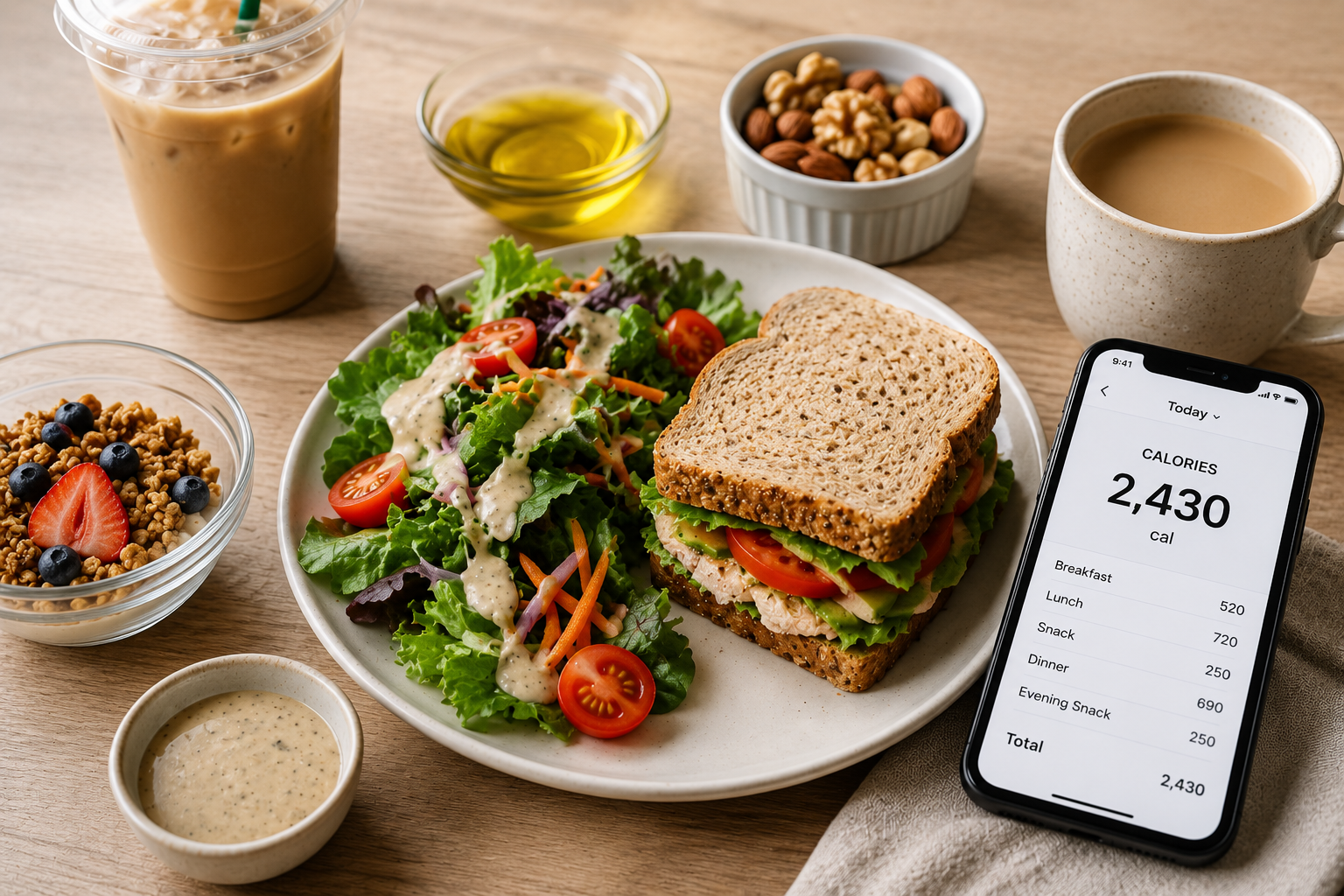
One thing I've noticed is that a lot of people don't have a problem with effort.
They have a problem with information.
I've talked to people who walk every day, try to make healthier choices, and genuinely want to lose weight. Yet after weeks or months of trying, the scale doesn't move.
The first assumption is usually that something is wrong with their metabolism.
The reality is often much simpler.
They're eating more calories than they realize.
The Problem Isn't Motivation
When people think about weight loss, they often focus on motivation, discipline, or finding the perfect diet.
But none of those things matter if you don't know how much you're actually eating.
Most of us are surprisingly bad at estimating calories.
Not because we're careless.
Because modern food makes it difficult.
Where Calories Hide
Think about a typical day.
You grab a coffee on the way to work.
You add some dressing to your salad at lunch.
You have a snack in the afternoon because you're hungry.
You cook dinner with a little oil.
Nothing sounds unhealthy.
Yet those small additions can easily add several hundred calories to your day.
The problem isn't one big meal.
It's the little things that don't seem important enough to count.
The "Healthy Food" Trap
One mistake I see all the time is assuming that healthy foods don't need to be monitored.
Foods like:
- Nuts
- Avocados
- Granola
- Smoothies
- Olive oil
can absolutely be part of a healthy diet.
They're also surprisingly calorie-dense.
A food can be healthy and still make weight loss more difficult if you're eating more of it than you realize.
Why Tracking Works
A lot of people hear "track your calories" and immediately think it sounds tedious.
I used to think the same thing.
But tracking isn't really about restriction.
It's about awareness.
Most people don't need to track forever.
They just need enough information to understand what's actually happening.
Once you see where your calories are coming from, making changes becomes much easier.
Try This for One Week
Before starting a new diet, cutting out carbs, or giving up on your progress, try a simple experiment.
For the next seven days, track everything you eat and drink.
Not to judge yourself.
Not to eat perfectly.
Just to learn.
You might discover that the thing preventing progress isn't a lack of effort at all.
It might just be a few hundred calories each day that you've never noticed before.
Final Thoughts
Weight loss is often presented as a battle of willpower.
In my experience, it's usually a battle against bad information.
The more accurately you understand your habits, the easier it becomes to make changes that actually work.
Sometimes the difference between success and frustration isn't another workout or another diet.
It's simply knowing what you're eating.